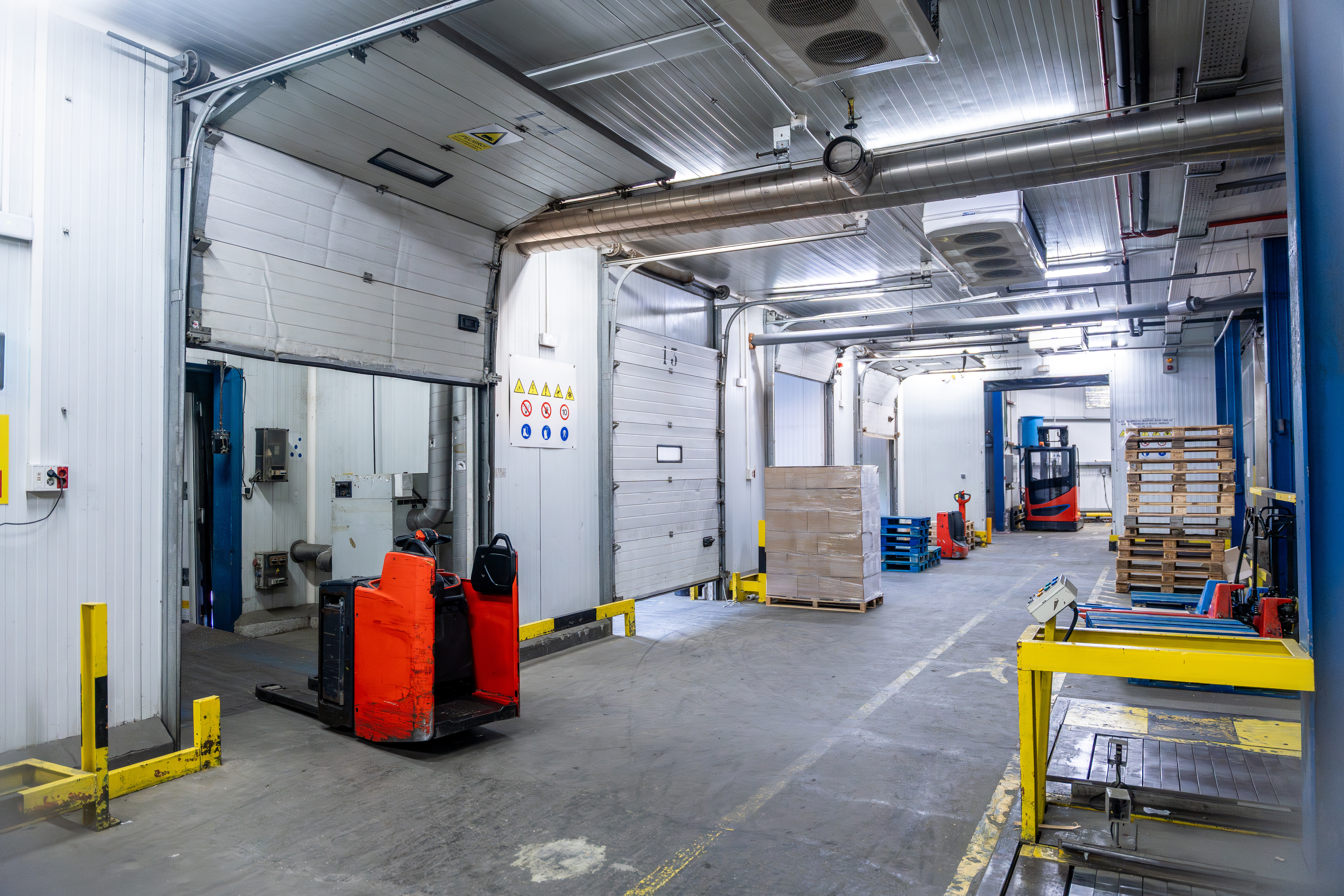
Every year, the same preparation cycle kicks off. Staffing plans, carrier confirmations, dock capacity reviews, and system audits. The industry knows what's coming, and it takes the lead-up seriously. Visibility makes the list too. It always does. But it almost always gets addressed the same way it always has: clipboards, scanners, and manual logging that depends entirely on the team executing correctly, every time, under pressure.
Then Q4 arrives, and things start to slip.
The Gap Nobody Wants to Name
Here's what most operations are actually working with: visibility exists, but it's incomplete in exactly the places that matter most.
It's not that warehouse and distribution teams don't have procedures. Receiving processes document loads and conditions, and scanners capture SKUs. But the moment between a truck pulling up to the dock and that shipment being confirmed in the system still runs on human intervention at every step. That's a genuine attempt at visibility. Just not one that holds up when volume spikes and margin for error disappears.
Scans get missed. Information gets recorded wrong. Damage goes undetected. Discrepancies go unnoticed until they surface somewhere downstream, at the worst possible time.
Closing that gap requires more than a process that only works under ideal conditions. It requires something that captures events consistently, interprets them against expected parameters, flags discrepancies before the truck leaves the dock or product gets put away, and documents everything in a format that holds up in an audit — without depending on a team member to execute every step perfectly in the middle of a slammed shift.
Most operations have pieces of that in place. Very few have all of it running consistently, on every load and every shift. So, visibility gets checked off the list. The gap stays open. And it lives quietly in the space between what the systems know and what actually happened, until something goes wrong.
A claim with no verified condition documentation at receiving. An inventory count that doesn't match what arrived. A compliance audit that surfaces a chain of custody gap from three months prior. These aren't sudden failures. They're the accumulated result of incomplete events during a period when the team thought visibility was handled.
What Peak Volume Does to a Manageable Problem
At steady-state volume, the gap can be survivable. The cost is still real, it's just diffuse enough to absorb and move on. Peak season changes the math entirely.
More trucks. More carriers. More SKUs. More seasonal workers without the knowledge to catch what veteran staff catch by instinct. The manual processes that contained the gap earlier in the year stop working in November because volume removed the margin that was holding everything together.
Pallets arrive damaged with no verified record of condition, and a straightforward claim becomes a negotiation. PO variances get missed in the rush, and the inventory discrepancy surfaces weeks later when it's nearly impossible to trace. LPNs go undocumented because the dock queue doesn't allow for it, and the compliance exposure that follows costs far more than the original error.
None of these outcomes are surprises. They were predictable from the moment the gap was left open. Peak season just brings them into the open.
What Closing the Gap Actually Looks Like
Closing the receiving visibility gap before peak season doesn't require the overhaul most operators assume. No ripping out existing infrastructure. No long implementation timelines. No disruption to current processes.
Tools like Nova Control are designed to work alongside what's already in place, integrated with existing systems and procedures in days. What changes is what happens as product moves through your facility. Instead of relying entirely on a team member working under time pressure with trucks stacking up behind the one they're processing — the system handles data capture, interpretation, and documentation automatically. Exceptions get flagged before the truck pulls away or product gets put away and every movement gets recorded in a format that's retrievable, auditable, and defensible.
The gap that survived every previous pre-peak checklist gets closed because the process no longer depends entirely on the team to catch everything manually under pressure.
The Item That Keeps Getting Checked Off Incomplete
Visibility isn't usually missing from pre-peak preparation. It's on every list; it gets attention, and teams believe they've addressed it to their best ability. However, manual processes, no matter how well-intentioned, weren't built for what peak season actually demands.
The operations that will navigate Q4 most cleanly this year are the ones that looked honestly at where their visibility actually stops and closed that gap while they still had time.
The trucks are coming. The list is already out. Before visibility gets checked off again, it's worth asking whether it's actually solved, or just assumed to be.